Source Silicone Coin Purse for Money, Keys, and Coins
Explore 27 silicone coin purse options with varying hardness, colors, and customization levels. Buyers can compare models like Mini Silicone Coin Purse-097S and Lady Coin Purse-055F for uses including money, keys, and coins.
Key considerations
Products List




Comprehensive Sourcing Guide
Strategic Sourcing Guide for Silicone Coin Purses
The global market for small leather goods and organizational accessories has seen a significant shift toward durable, flexible, and hygienic materials, with silicone emerging as a dominant choice for coin purses. For B2B procurement professionals, sourcing silicone coin purses requires a nuanced understanding of material properties, customization capabilities, and compliance frameworks. Unlike traditional leather or fabric alternatives, silicone offers unique advantages in terms of water resistance and tactile feel, yet it presents specific challenges regarding hardness variations and supply chain transparency. This guide provides a structured approach to evaluating potential suppliers and products, ensuring that procurement decisions are grounded in verifiable data rather than marketing assertions.
Material Composition and Physical Properties
The foundational element of any silicone coin purse is the polymer composition, which dictates the product's durability, texture, and safety profile. In the current supply landscape, the material is consistently identified as high-grade silicone, available in various hardness levels ranging from soft to partial hard. Buyers must recognize that "soft" silicone offers a pliable, squeezable experience ideal for casual carry, while "partial hard" variants provide structural integrity for products requiring shape retention. The hardness spectrum is not uniform across all listings; some products are described as "medium soft," indicating a middle ground between flexibility and rigidity.
Waterproofing is a critical differentiator in this category. While many silicone coin purses are marketed as fully waterproof, making them suitable for outdoor activities or travel, specific product lines are noted as "not waterproof." This distinction is vital for buyers targeting specific use cases. A purse intended for a gym bag or beach environment requires a fully sealed, waterproof construction, whereas a product for indoor office use might prioritize aesthetics over total water resistance. Additionally, the weight of the finished product varies, with observed specifications ranging from 50g to 52g for standard models. This slight variance can impact shipping costs and the perceived value of the item, particularly when calculating landed costs for bulk orders.
Technical Specifications and Customization Parameters
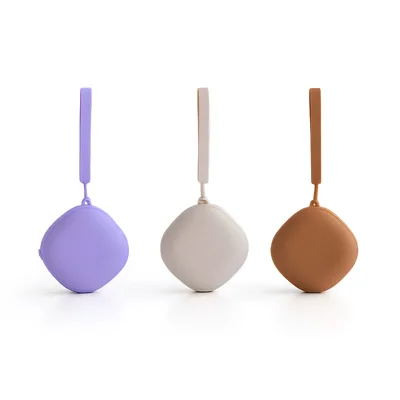
Customization is a primary driver for silicone coin purse procurement, allowing brands to differentiate their offerings through unique shapes, sizes, and branding. The market supports a wide array of customization options, including tailored dimensions and specific fashion elements. For instance, products are available with "crocodile grain" textures to mimic luxury leather or "candy color" palettes to appeal to younger demographics. Color options are extensive, often including purple, pink, blue, skin tones, yellow, and grey, allowing for precise brand alignment.
Size specifications are frequently flexible, with some models offering "customized" dimensions while others adhere to standard measurements such as 104.57.5cm. The production model numbers, such as Mini Silicone Coin Purse-097S or Lady Coin Purse-055F, serve as unique identifiers for these variations. Packaging is another area where customization is prevalent. Standard practices include inner packing of one piece per carton, while other suppliers offer options like PP bags or OPP bags, often with the ability to meet specific customer requirements. This flexibility extends to the Minimum Order Quantity (MOQ), which can range from as low as 1 unit for sampling to 1000 units for full production runs, with 500 units being a common threshold for established orders.
Compliance, Certification, and Safety Standards
In the realm of B2B procurement, compliance is non-negotiable, particularly for products that may come into contact with skin or personal items like money and keys. The supply chain for silicone coin purses includes suppliers who adhere to rigorous international standards. Verified certifications often cited in the market include RoHS, REACH, FDA, and ISO. These certifications indicate that the silicone material is free from harmful substances and meets safety requirements for food contact and general consumer use. Specifically, FDA certification is a key indicator for safety, ensuring the material does not leach toxins.
However, buyers must exercise caution when interpreting certification claims. While some product listings explicitly state compliance with SGS standards or FDA regulations, others may only list general quality assurances. The presence of CE certification is noted in background data but should be treated as a background reference rather than a guaranteed attribute for every listed product. Procurement teams should request specific test reports and certificates of analysis for every batch ordered. Relying on a supplier's general claim without verifying the specific documentation for the production run can lead to compliance failures in target markets. The standard for production should always be verified as "customized" or aligned with the specific regulatory requirements of the destination country, rather than assuming a universal standard applies.
Cost Drivers and Economic Considerations
The pricing structure for silicone coin purses is influenced by a complex interplay of material costs, customization complexity, and order volume. The observed price range in the market spans from $0.07 to $6.75 USD, a significant variance that reflects differences in quality, design intricacy, and brand positioning. The lower end of the spectrum typically corresponds to standard, non-customized models with simple color options and basic packaging. Conversely, the higher price points are associated with products featuring complex fashion elements like crocodile grain, specialized OEM branding, and premium packaging solutions.
MOQ is a primary economic lever. Suppliers with lower MOQs, such as 500 pieces, often charge a premium per unit to cover setup costs and maintain flexibility. In contrast, orders exceeding 1000 pieces may benefit from economies of scale, though the specific pricing is not fixed and depends on the supplier's capacity. The origin of the product also plays a role in cost dynamics. Products originating from Fujian, China, or Guangdong, China, represent different logistical and labor cost structures. Buyers should evaluate the total cost of ownership, including shipping, tariffs, and potential quality control expenses, rather than focusing solely on the unit price. The "Quality: Best" attribute observed in some listings suggests a premium tier, but this should be validated through sample testing rather than accepted as a default market standard.
Supplier Evaluation and Operational Capabilities
Selecting the right supplier requires a deep dive into their operational capabilities and responsiveness. A robust supplier profile includes clear OEM (Original Equipment Manufacturer) and ODM (Original Design Manufacturer) services. Many suppliers in this sector explicitly state "OEM: Yes" or "OEM Order: Accept," indicating their willingness to produce goods under a client's brand. This is crucial for businesses looking to create a private label. The ability to accept "various usage" requirements, such as for money, coins, or keys, demonstrates versatility in product design.
Geographic location is a factor in supply chain resilience. Suppliers are located in major manufacturing hubs like Fujian and Guangdong, which are known for their expertise in silicone processing. However, buyers must verify the specific lead times and production capacity of each supplier, as these are not uniform across the market. The "Age: New" attribute suggests that some products are recent introductions, which may imply newer tooling or updated designs. When evaluating suppliers, procurement teams should prioritize those who offer transparent communication regarding their production standards and who can provide samples that match the exact specifications of the final order. The "Usage: Household" classification also indicates that some products are designed for broader domestic applications, expanding the potential market beyond just coin storage.
Quality Control and Long-Term Procurement Strategy
Implementing a rigorous quality control (QC) protocol is essential for maintaining brand reputation in the silicone coin purse market. Given the variability in hardness and waterproofing claims, buyers should establish clear acceptance criteria before production begins. This includes testing for water resistance, checking the integrity of the zipper or closure mechanisms, and verifying the weight and dimensions against the agreed-upon specifications. The "Style" of the product, whether it is "Simplicity," "Leisure," or "Cartoon," must be consistent with the visual identity of the brand.
Long-term procurement considerations involve building a relationship with suppliers who can scale with demand. The "Customization: Available" attribute is a positive sign, but buyers should ensure that the customization process is repeatable and that the supplier can maintain consistency across large batches. The "Standard: customized" note implies that each order may have unique requirements, necessitating a flexible yet disciplined approach to contract management. Buyers should also consider the environmental impact and end-of-life disposal of silicone products, as sustainability is becoming an increasingly important factor in B2B decision-making.
Comparative Analysis of Product Attributes
To facilitate clearer decision-making, the following table summarizes key attributes observed across different product listings. This comparison highlights the diversity in the market and helps buyers identify which products align with their specific needs.
| Attribute | Option A | Option B | Option C | Option D |
|---|---|---|---|---|
| Hardness | Partial Hard | Medium Soft | Soft | Soft |
| Waterproof | Not Waterproof | Waterproof | Waterproof | Waterproof |
| Style | Simplicity | Leisure | Cartoon | Simplicity |
| Fashion Element | Crocodile Grain | Candy Color | Cartoon | N/A |
| MOQ | 500 PCS | 1000 PCS | 1 PCS | 500 PCS |
| Certification | RoHS, REACH, FDA, ISO | FDA | SGS | N/A |
| Origin | China | Fujian, China | Guangdong, Cn | N/A |
| Usage | Money, Coin, Key | Coin | Household | Various |
| Packing | Inner: 1 Piece/Carton | PP Bag | OPP Bag | 1PC/Oppbag |
This table illustrates that no single product fits all criteria. A buyer seeking a waterproof, certified product for a luxury brand might select Option A or B, while a buyer looking for a low-cost, high-volume item for a promotional campaign might prioritize Option C or D. The decision ultimately rests on the specific priorities of the procurement team regarding cost, compliance, and design.
Final Procurement Recommendations
Sourcing silicone coin purses successfully requires a balance between technical due diligence and strategic supplier selection. Buyers must move beyond surface-level descriptions and verify critical attributes such as hardness, waterproofing, and certification status through direct communication and sample testing. The market offers a wide range of options, from basic utility items to highly customized fashion accessories, but the variability in specifications demands a careful, evidence-based approach. By focusing on verified data, maintaining clear quality standards, and understanding the cost drivers, procurement professionals can secure a reliable supply chain that meets the demands of the modern consumer market.
FAQs
Can silicone coin purses be customized for branding?
Yes, customization is available for many silicone coin purse models. Buyers can request tailored dimensions, specific fashion elements like crocodile grain, and unique packaging options to align with their brand identity.
What certifications do silicone coin purse suppliers typically hold?
Verified suppliers often hold certifications such as RoHS, REACH, FDA, and ISO to ensure material safety. Some products also meet SGS standards, though buyers should always request specific test reports for every batch ordered.
How does the hardness of silicone coin purses vary?
Hardness levels range from soft to partial hard, with some models described as medium soft. Soft variants offer a pliable feel, while partial hard options provide structural integrity for shape retention during daily use.
What is the typical minimum order quantity for these products?
Minimum order quantities vary from 1 unit for sampling up to 1000 pieces for full production runs. A common threshold for established orders is 500 pieces, though specific requirements depend on the supplier's capacity.
Are silicone coin purses waterproof for outdoor use?
Waterproofing capabilities vary by product line, with some models fully waterproof and others noted as not waterproof. Buyers targeting outdoor activities should verify specific product attributes before placing bulk orders.
Which locations are major manufacturing hubs for silicone purses?
Major manufacturing hubs include Fujian and Guangdong in China, known for expertise in silicone processing. Products from these regions often have distinct logistical and labor cost structures that affect the total landed cost.